


Street Photography Techniques in Barcelona
Master the Art of Street Photography While Exploring Barcelona
Practicing street photography techniques while in Barcelona is a great step to becoming a successful street photographer. Shooting on the streets of this city can provide invaluable knowledge for general street photography when visiting other European destinations. Thanks to a multicultural and liberal society, the city has a dynamic and youthful feel to many of the central neighborhoods. While other European cities offer their own particular charm, the gritty, residential areas of Barcelona are a delight for the serious street photographer.
Photographing candid images of the locals in an urban environment can be one of the most satisfying and addictive ways of exploring the districts of Barcelona. While there is far too much to capture in a city, or even a neighbourhood at any given moment, this type of photography allows us to freeze one of those moments and study all of the small dramas that were taking place.
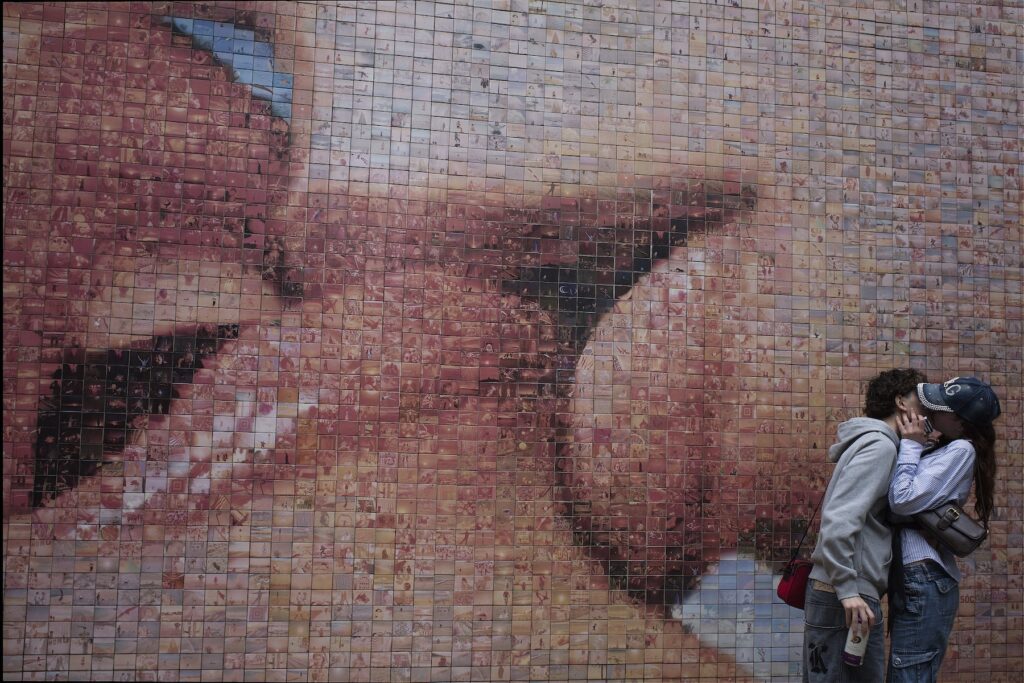
While it’s true that street photography is no easy task, there is no other type of photography that allows you to experience life so up-close and personal. It can be intimidating at first, though exhilarating once you get your masterpieces downloaded onto the computer. I feel that this is what makes street photography so unique and fascinating when compared to other genres of photography. Street photographs are able to convey the humor, irony, and reality of everyday life. The beauty of the world awaits you – go out and grab it!
Below are some pointers that may help you find your way to photographic utopia. These are my own recommendations for shooting up the streets of Barcelona.
Find your location
Instead of wandering all over a city, find fewer locations but with good backgrounds and pockets of light. Knowing how the light falls in a certain spot at any given time of day is key to creating dramatic shots with saturated colours and deep blacks. Try shooting from different angles – getting down low while using a flip-out LCD screen can create interesting lead-in lines up to your focal point, without having to lie in a gutter! Working a scene with different camera settings and compositions will give you a higher success rate than shooting randomly all over the place.
Be inconspicuous
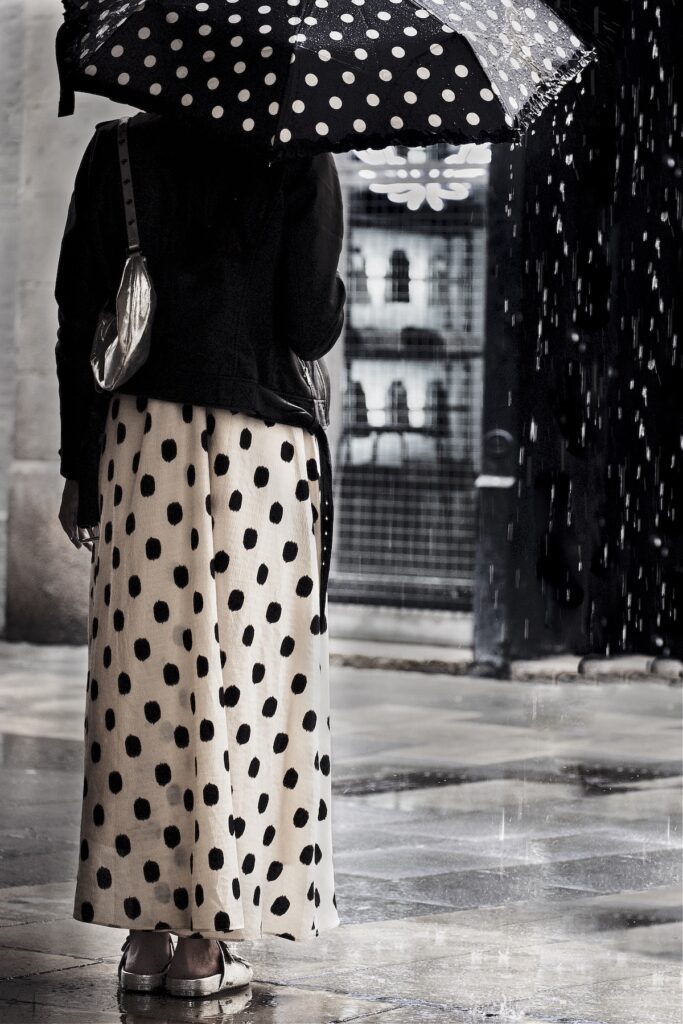 Try to wear dark, plain clothes when shooting street photography. Ideally a small camera with a small lens hung around your shoulder, inside an open shirt is inconspicuous, but can be extremely effective in “getting the shot”. Wearing bright clothes with huge cameras and large lenses hanging off your neck is bound to get you noticed. Try to get your camera set up before lifting it to your eye, and take the shot quickly. Personally, I make an effort to carry as little as possible and just let the camera be an extension of myself. Going out with 1 small mirror-less camera fitted with a 35mm prime lens hidden under a shirt can be a revelation!
Use wider lenses
Rather than using large, conspicuous tele-zooms, try using wide angle lenses whilst getting close to the action. Most serious street shooters use focal lengths between 24mm-50mm. Using wider angle lenses close-up gives you a more interesting perspective while including some of the background – great for story-telling type shots. Over time, It will also help you to overcome your shyness and the restrictive focal lengths will help you learn where you need to be standing before even taking the shot. Becoming familiar with a particular focal length, will allow you to work faster, and judge your position beforehand in relation to your subject and the background.
Zone focussing
Zone focussing, also known as “shooting from the hip” is an invaluable technique for street photography. In fact, some serious street photographers use this technique exclusively. While you will surely end up deleting at least 90% of shots taken this way, those remaining frames can sometimes yield extraordinary images. Shooting from lower angles [holding the camera in hand, shooting up slightly], together with your subjects having no idea they are being photographed, can create images that look like they were taken with a waist level finder on a twin reflex film camera. Looking down on a flip-up screen is one way to do it, the other is by doing the following: Set camera to “silent” mode if you have it, set a small aperture, use Auto ISO, pre-focus a short distance in manual focus, shoot your subjects at approx. the same working distance as your focus distance.
Follow interesting subjects
When you find potential in a subject, follow them. You don’t have to harass or chase individuals, though walking ahead of them until they are in front of an interesting background or good light can make for an image where all the elements come together. People with interesting clothes, weird looking hair or just walking their dog can make for interesting shots. Barcelona is known for it’s warm people. Instead of trying to take shots of individuals without them looking, try striking up a conversation to get a tightly cropped headshot. If your subject is not sure if they want their photo taken, offer to email them the image afterwards. You may even end up making a new friend!

Get artistic by using the Shutter Priority mode
Using a slower shutter speed on your camera’s shutter priority function will allow you to add motion blur in crowds, while emphasising and isolating stationary subjects. A small aperture and low ISO may give you enough sense of movement in daylight. Failing that, try shooting with a neutral density filter to cut down the amount of light. In general, a tripod is not going to make you very inconspicuous. Try bracing your camera while leaning on a lamp post with your elbows close to your body. Some modern lenses and camera bodies have vibration-reduction built in, which should be enabled for these types of shots.
For street photography when using lenses between 24mm – 50mm, we would suggest using shutter speeds of at least 1/250 Sec to freeze the action and avoid motion blur. Depending on the situation, you may find that 1/500 Sec is necessary. These shutter speeds generally mean using higher ISO’s when light levels are low.
Try using the Aperture Priority mode
Using the Aperture Priority mode of your camera will automatically select the shutter speed, giving you semi-automatic control of the output of the desired image. Aperture Priority allows the photographer to select how much depth of field around the subject is shown, light levels and avoiding high ISO’s, and take photographs quickly – an important aspect for street photography many street photographers.
Using this mode gives you the freedom to concentrate on composition, lighting and capturing shots with fast moving subjects. To make small adjustments in depth of field or shutter speeds, try the Program shift mode. Our recommended mode for most street photography scenarios would be Aperture Priority combined with Exposure Compensation, and a minimum shutter speed of 1/500 Sec on the Auto ISO feature enabled.
Create depth by using layers
Layering in photography is a compositional technique that involves placing subjects at different distances, in order to deconstruct chaos and create depth. Using a combination of foreground, middle ground and background, the eye is drawn into the frame. While some photographers use selective focus within a cluttered scene to create a three dimensional look, typical apertures of F8 – F11 ensures front to back focus when layering with modest wide angle focal lengths. While creating layered compositions can be hard to achieve, these compositions can become addictive due to their immediate impact.
Using Apps in smartphones to trigger the shutter
Photographers who own some of the latest cameras with built-in WiFi are in for a treat. Imagine having your camera hanging around your neck or over your shoulder, while viewing the image through your smartphone? Some camera models such as those by Fuji come with a software that you can install onto your smartphone or tablet. Other manufactures, such as Triggertrap, offer a dongle with software. You can view the composition, camera settings and focus on-screen while looking at your phone or tablet – your camera will be pointed at your subject, though they will have no idea of you taking their shot. These WiFi enabled cameras can also be triggered by mobile devices for shooting time-lapse, close encounters with wildlife, and just about any other reason you can think of.

You can find information on our memorable 4 Day Barcelona Street Photography Workshop if you are planning to visit Barcelona for this purpose. For photographers planning a visit to Israel in the future, we created a post on Street Photography in Jerusalem. Unlike capturing this genre of photography within Europe, this post takes into account religious and cultural considerations, which can also be useful when traveling to developing countries.